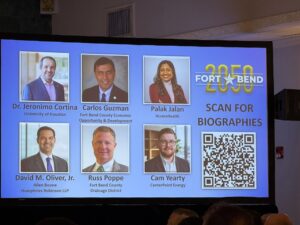
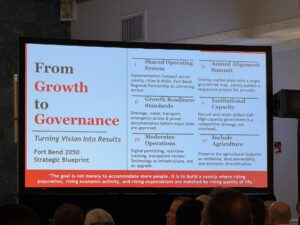
As Fort Bend County Treasurer, I spend a lot of time thinking about what our growth means for the county’s finances, and the Fort Bend 2050 study gives the clearest picture I’ve seen of what’s ahead. Led by Dr. Jeronimo Cortina, the Senator Don Henderson Professor of Political Science and Executive Director of the Population Health Collaborative at the University of Houston, the research draws on regional surveys, expert interviews, focus groups, and engagement with industry leaders across the county. The conclusion I keep coming back to is simple: growth alone isn’t the goal. Responsible, coordinated, forward-looking growth is — and that takes planning, not just optimism.
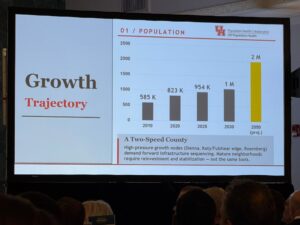
The scale of what’s coming is hard to overstate. Fort Bend’s population climbed from 585,000 in 2010 to 823,000 in 2020 and roughly 954,000 by 2025, and it’s on track to cross 1 million before 2030 and approach 2 million by 2050. What strikes me most is the idea of a “two-speed county”: high-pressure growth nodes like Sienna, the Katy/Fulshear edge, and Rosenberg need infrastructure built ahead of demand, while our mature neighborhoods need reinvestment and stabilization. Those are two very different problems, and treating them the same way would be a mistake.
Housing affordability is where I think the data should concern every resident, not just policymakers. Nearly half of the county’s block groups — 47.2 percent — already fall below the study’s affordability threshold, and almost a quarter sit in severe or high affordability stress. Median home values are projected to climb from roughly $400,000 to $470,000 by 2030, even as the county adds more than 43,800 occupied housing units, a 14.1 percent increase, over that same span. Owner-occupied tenure is expected to hold at a relatively stable 73 percent through 2030, which is a bright spot, but affordability pressure at this scale has real consequences for who can afford to stay in Fort Bend as it grows.
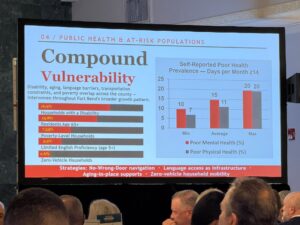
The research also surfaces what the study calls “compound vulnerability” among at-risk residents — a reminder that growth doesn’t lift every household equally. Nearly 17 percent of Fort Bend households include someone with a disability, almost 14 percent of residents are 65 or older, 7.5 percent of households live below the poverty level, 5.3 percent have limited English proficiency, and 2.6 percent have no vehicle. These factors tend to overlap in the same neighborhoods, and self-reported poor mental and physical health rises sharply in the highest-need areas. To me, this is the part of the report that argues most directly for treating things like language access, transportation, and aging-in-place support as core infrastructure rather than optional programs.
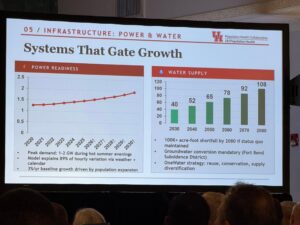
Infrastructure is where the numbers get most concrete, and most sobering. Power and water are systems that can gate our growth if we don’t plan ahead of it. Peak electricity demand already runs 1 to 2 gigawatts on hot summer evenings, with baseline demand growing roughly 3 percent a year alongside the population. Water supply needs are projected to rise from about 40,000 acre-feet in 2030 to 108,000 by 2080, and without changes to how the county manages supply, we could face a shortfall exceeding 100,000 acre-feet by then. Mandatory groundwater conversion through the Fort Bend Subsidence District and a “OneWater” strategy built on reuse, conservation, and supply diversification aren’t optional extras — they’re the mechanisms that keep growth from outrunning our capacity to support it.
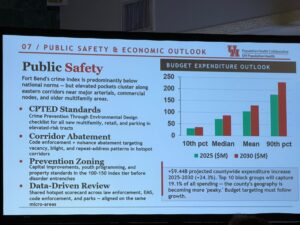
The public safety and budget findings hit closer to home for me as Treasurer. The county’s crime
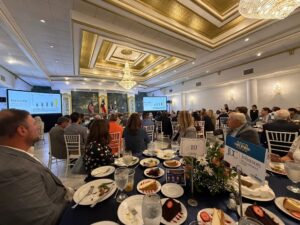
Today I had the opportunity to attend the Fort Bend Regional Partnership‘s Fort Bend 2050 presentation at Safari Texas Ranch in Richmond. Fort Bend County is one of the fastest-growing counties in the nation, and today’s discussion made clear that growth alone is not the goal — responsible, coordinated, and forward-looking growth is.