Fort Bend County may be standing at the threshold of one of the largest economic-development opportunities in its history.
Tesla is considering southeastern Fort Bend County for Project Crystal Sun, a proposed solar-cell and solar-module manufacturing campus representing approximately $10.1 billion in capital investment. The proposed site encompasses portions of roughly 3,057 acres near FM 762 and FM 1994 within Lamar Consolidated Independent School District. Tesla’s application projects approximately 9,712 permanent full-time jobs by 2033, an annual payroll of approximately $1.3 billion at full operation, and about 1,147 construction jobs at peak construction. Commercial operations are projected for the first quarter of 2029 if Fort Bend is selected. (Lamar Consolidated ISD)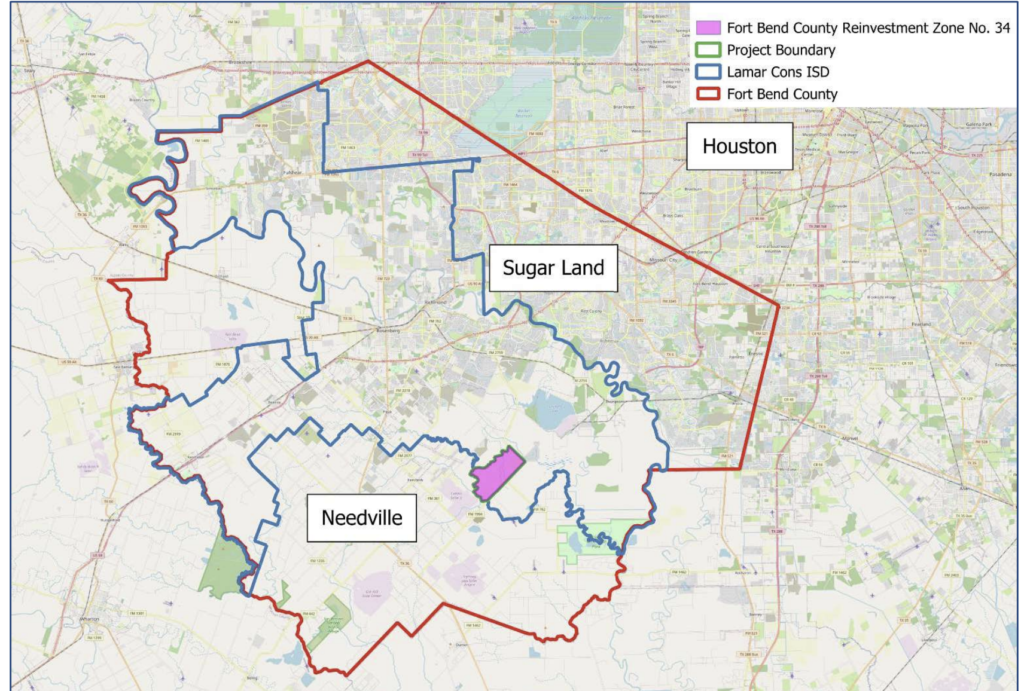
This is still an opportunity, not a completed deal. Tesla has said that another viable location outside Texas remains under consideration. On September 15, the Lamar CISD Board approved its portion of the proposed Texas Jobs, Energy, Technology and Innovation, or JETI, incentive process. The project still requires additional state action, and Tesla ultimately must make its site-selection decision. (ABC13 Houston)
The scale deserves attention. So does the distinction between what is proposed and what has actually been committed.
Project Crystal Sun is not a data center. It would be a manufacturing complex producing photovoltaic solar cells and assembled solar modules. But its arrival in the Fort Bend conversation provides an excellent starting point for a much broader question facing our county and Texas:
How do we aggressively pursue transformative private investment while making certain that the infrastructure, electricity, water, roads, incentives and public services required by that investment produce a sustainable benefit for the community paying for and living around it?
That same question is becoming increasingly important as Texas experiences an extraordinary expansion of artificial-intelligence and high-performance-computing data centers.
I have watched this industry evolve since the 1990s
My interest in this issue is not simply theoretical and does not begin with my service as County Treasurer.
Long before entering county government, I spent decades in the seismic-imaging and technology industries, where high-performance computing was fundamental to the business. My experience operating and expanding large HPC environments dates to the mid-1990s, when the enormous computational requirements of three-dimensional seismic imaging were driving rapid growth in processing power, data storage, cooling, electrical capacity and high-speed networking.
At Petroleum Geo-Services, (PGS), my responsibilities included global computing resources and, later, serving as Vice President of Imaging Compute Services, responsible for infrastructure supporting the company’s global seismic-imaging business, including mega datacenters in Houston, London and Kula Lumpur as well as significant datacenters in Cairo, Rio de Janeiro and Perth, Australia. I also previously had business responsibility for seismic processing business in Houston, Villahermosa and Rio de Janeiro as Regional President for Imaging & Engineering in North and South America. (Fort Bend County Treasurer)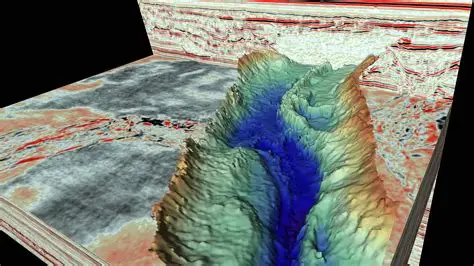
These were true high-performance-computing environments operating around the clock across multiple continents. In the mid-1990s, my work included expansion of HPC equipment and storage, computer-room buildouts, increased electrical and cooling requirements and development of additional computing locations. PGS itself reported processing capacity exceeding one teraflop as early as 1998 — enormous computational capability for that era. (Fort Bend County Treasurer)
One example from my own experience demonstrates why the design of a data center matters just as much as its size. In 2008, Petroleum Geo-Services developed an advanced high-performance-computing data center at our Weybridge, England office that was specifically engineered to take advantage of the local climate. Rather than relying continuously on conventional compressor-driven air conditioning, the facility used an innovative indirect “free cooling” system that took advantage of cool outside air to remove heat while keeping the outside air itself—and its humidity and contaminants—out of the computer room. The facility ultimately achieved a Power Usage Effectiveness of approximately 1.15 and reduced annual electricity consumption by more than six million kilowatt-hours compared with PGS’s previous UK facility. Conventional mechanical cooling was needed during only a small number of hours each year.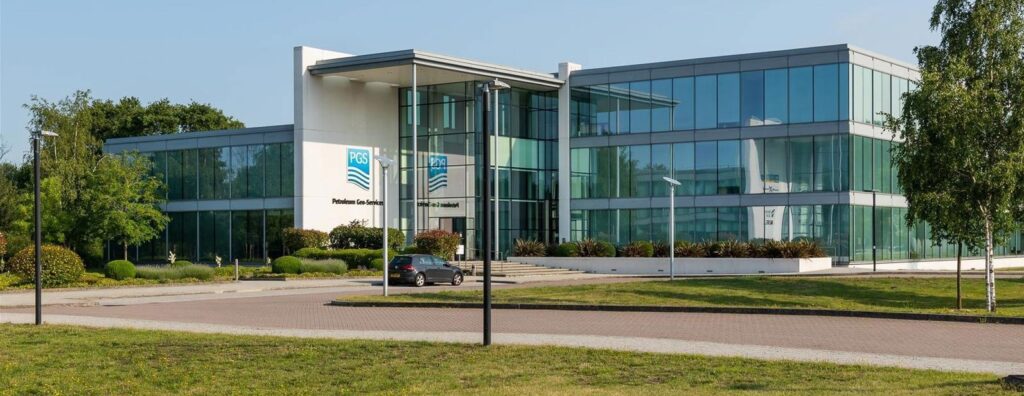
As our computing requirements continued to grow, further engineering improvements allowed the Weybridge facility to increase computing capacity from a planned 1.8 megawatts to approximately 2.7 megawatts within essentially the same physical footprint, with rack densities approaching 30 kilowatts. The project was ultimately recognized by the Uptime Institute for its efficiency. I believe that experience provides an important lesson for the data-center discussion taking place in Texas today: resource consumption is not simply an unavoidable consequence of computing growth—it is also the result of engineering choices. The cooling system appropriate for England would not necessarily be appropriate for Fort Bend County’s hotter and more humid climate, but developers should be expected to demonstrate that they have evaluated the most efficient available technologies for our particular environment, including the tradeoffs among electricity use, water consumption, reliability and cost.
By 2010, PGS was the anchor energy-sector customer in CyrusOne’s new Houston West data center, occupying 10,000 square feet of raised-floor space. At the time, as PGS’s manager of global compute resources, I explained that our selection process evaluated performance, environmental impact and cost efficiency — three considerations that remain remarkably relevant to today’s discussion. (Data Center Dynamics)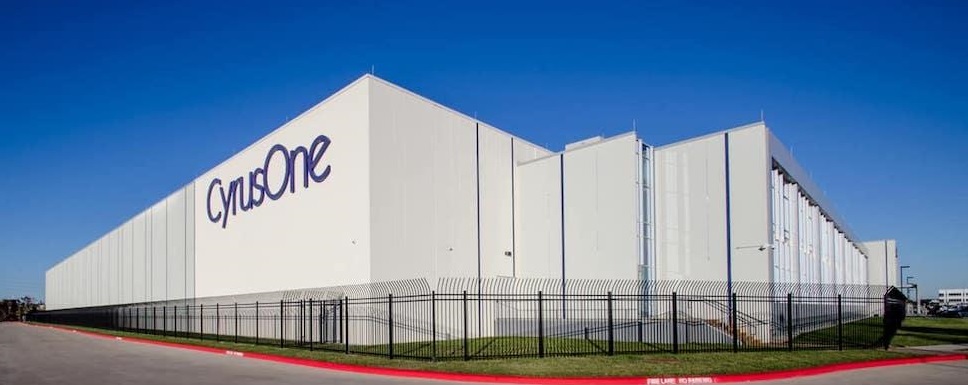
The scale continued to grow. A current Network Cabling Services case study describes PGS’s Houston data-center environment as approximately 112,000 square feet, supporting global seismic processing and interpretation with high-performance data architecture and an infrastructure path moving from 10-gigabit networking toward 100-gigabit and greater capabilities. (Network Cabling Services)
The technology has changed dramatically. The underlying operational realities have not.
Large computing facilities need power, cooling, network connectivity, physical security, redundancy and extraordinarily high uptime. Decisions made in the design phase can determine operating costs and resource consumption for decades.
That experience shapes how I look at today’s AI data-center boom.
I understand why companies want to build these facilities. I also understand that megawatts, cooling capacity, redundancy and infrastructure are not abstract numbers. They represent real resources that somebody must supply and somebody must pay for.
Texas is experiencing a computing buildout on an entirely different scale
ERCOT reported in February that it had identified approximately 400 operating or approved cloud-based data-center sites of one megawatt or larger. Those sites represented about 9,850 MW of installed or approved-to-energize capacity. Actual data-center demand grew 15.5% between January 2025 and January 2026.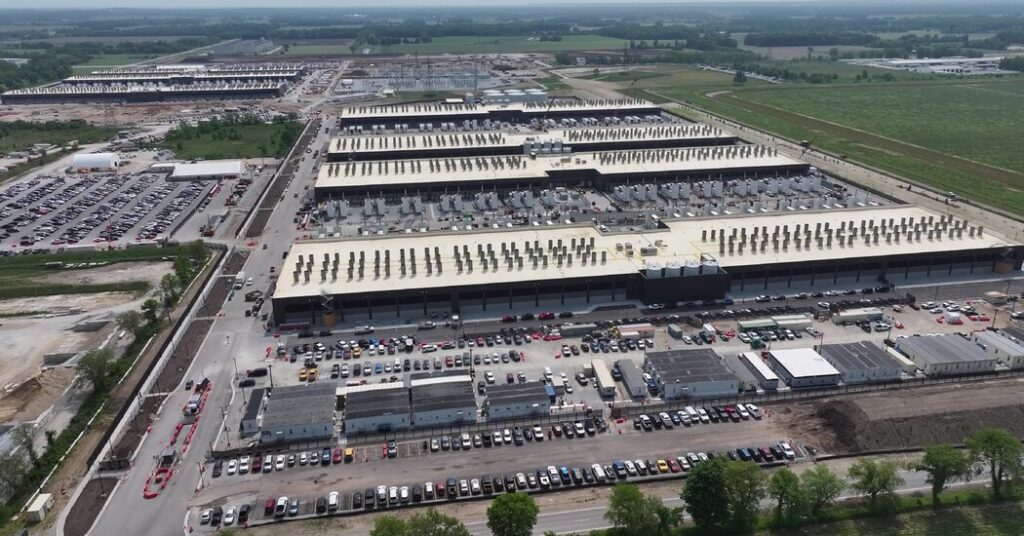
The development pipeline is much larger.
As of February 2026, more than 232,000 MW of proposed large loads were in ERCOT’s interconnection process. About 72% — approximately 165,000 MW — was identified as data-center demand. To put that number in perspective, ERCOT noted that the entire large-load queue was nearly three times its then-record system peak demand. (ERCOT)
But that number requires an important qualification.
232,000 MW of requests does not mean 232,000 MW will actually be built.
Interconnection queues can include projects at different stages of development, competing sites for the same project and proposals that will never reach construction. Texas is now requiring greater evidence of site control, financing, project maturity and other commitments precisely because treating every proposed megawatt as equally certain could cause the state to build unnecessary transmission infrastructure.
That is sensible.
Infrastructure should follow credible demand, not merely paper demand.
The economic-development equation is different for every project
This is where the Tesla proposal provides a useful contrast.
According to Tesla’s application, $10.1 billion of investment could ultimately accompany almost 9,700 permanent jobs.
Consider a very different Texas example. Meta’s newly operating AI-optimized data center in Temple represents more than $1.2 billion of investment and supported approximately 1,200 skilled-trade workers during peak construction, but the completed facility supports almost 100 permanent operating positions. (Meta Data Centers)
Both can be significant investments. But they have very different economic profiles.
That does not make one project good and another bad. It demonstrates why local governments should never evaluate economic-development proposals solely by the size of the capital-investment announcement.
A complete evaluation should consider permanent jobs, wages, taxable value, depreciation, construction activity, local purchasing, public incentives, water use, electrical demand, roads, emergency services and any infrastructure costs shifted to the public.
A billion dollars of servers and electrical equipment and a billion dollars of manufacturing facilities may both appear on a press release as “$1 billion invested,” but their long-term effects on a community can be quite different.
Electricity is becoming a fundamental economic-development issue
Modern hyperscale data centers bear little resemblance to the computer facilities of the 1990s.
Individual facilities can seek hundreds of megawatts. Large campuses can approach or exceed a gigawatt.
Texas has responded.
Senate Bill 6 directs the Public Utility Commission to establish standards for large loads, generally beginning at 75 MW unless the commission determines a lower threshold is necessary. The statute requires large-load customers to contribute toward interconnection costs, establishes a transmission screening fee of at least $100,000, requires evidence of site control and establishes financial-commitment requirements intended to reduce the possibility that other customers are left paying for transmission built for projects that never materialize. (Texas Legislature Online)
The same law establishes mechanisms involving large-load curtailment and demand reductions during certain grid emergencies. (Texas Legislature Online)
The principle is important:
Growth should help pay for the infrastructure growth requires.
That principle does not discourage development. In my experience in private industry, predictable rules and clearly allocated infrastructure responsibilities can actually improve site-selection decisions because both sides understand the economics before substantial money is committed.
Water could ultimately be the more difficult Fort Bend question
Electricity receives most of the attention because data-center loads are so large. Water deserves equal scrutiny.
Data centers do not all consume water at the same rate.
Traditional evaporative cooling can require significant water. Closed-loop liquid cooling, dry cooling, reclaimed water and hybrid systems can dramatically change the equation. Climate, server density, operating temperature and workload also matter.
Consequently, statewide estimates vary substantially.
The Houston Advanced Research Center estimated that Texas data centers consumed approximately 25 billion gallons of water in 2025, counting both direct cooling and indirect water associated with electricity generation. Depending on industry growth and technology choices, HARC modeled potential 2030 consumption between 29 billion and 161 billion gallons annually. (Houston Advanced Research Center)
University of Texas researchers produced another scenario analysis estimating that data centers could account for approximately 3% to 9% of Texas water use by 2040. Importantly, the researchers acknowledge that Texas lacks complete facility-level operator data, so these figures are scenarios rather than precise forecasts. (UT News)
The uncertainty is part of the issue.
Texas cannot effectively plan resources it cannot accurately measure.
On September 14, Governor Greg Abbott directed the Texas Water Development Board to enforce existing water-use reporting requirements involving major users, including data centers. ERCOT simultaneously began collecting detailed information regarding electricity consumption, water consumption and sources, cooling technology, public incentives, noise, lighting, traffic and emergency-response impacts for qualifying data-center projects of 25 MW and larger. Responses are due in October, with ERCOT expecting a public report by December 10. (Texas.gov)
Better data should help both communities and developers make better decisions.
Water has an additional dimension in Fort Bend County
Fort Bend’s circumstances make that discussion particularly important.
Our estimated population reached 975,191 in 2025, an increase of approximately 18.3% from the 2020 population-estimate base. We are therefore discussing industrial water demand in a county simultaneously experiencing substantial residential and commercial growth. (Census.gov)
Groundwater withdrawal also has a direct relationship with land subsidence.
The Fort Bend Subsidence District reported 81.3 million gallons per day of groundwater withdrawals in 2024, of which approximately 84% was for public water supply. Combined groundwater and alternative-source water use was about 181.4 million gallons per day that year. (Fort Bend Subsidence District)
The District’s updated regulatory plan consequently requires further conversion away from groundwater. In Regulatory Area A, beginning with permits issued January 1, 2030, groundwater withdrawals generally may not exceed 40% of total water demand. Regulatory Area B begins additional reduction requirements later. (Fort Bend Subsidence District)
That makes the source of water for a major industrial or data-center project particularly important.
A facility relying heavily on potable water or additional groundwater presents a different community equation than one designed around reclaimed water, closed-loop cooling or another non-potable source.
Fort Bend has another limitation that residents should understand
Texas counties are not cities.
Fort Bend County has not adopted general zoning ordinances in its unincorporated areas and does not possess the same broad land-use powers available to incorporated municipalities. The County can regulate matters for which the Legislature has given counties authority, including areas involving subdivisions, drainage, floodplain management, roads, development permitting and fire-code compliance, but it cannot simply create municipal-style zoning throughout unincorporated Fort Bend. (Fort Bend County)
That means responsibility is often divided among several entities: Fort Bend County, municipalities, utility districts, the Fort Bend Subsidence District, electric utilities, ERCOT, the PUC, TCEQ and other state agencies.
It also makes contractual tools particularly important where they are legally available.
Economic-development agreements, utility-service agreements, tax-abatement agreements and infrastructure agreements can provide opportunities to establish measurable commitments that general county zoning might otherwise address.
What should a mutually beneficial agreement consider?
There is no single template appropriate for every project, and the legal authority to impose a particular requirement depends on the governmental entity and location involved. But for very large projects, communities and developers can consider provisions such as:
- Full resource disclosure. Before significant public incentives are committed, establish credible peak and annual electricity demand, water consumption, water source, wastewater generation, cooling technology, backup generation, battery systems and expected expansion phases.
- Infrastructure-cost responsibility. Identify who pays for substations, electric interconnection, transmission improvements, water and wastewater extensions, drainage improvements, roadway expansion, turning lanes and other infrastructure predominantly required by the project.
- Water-efficiency commitments. Where practical and legally permissible, encourage or require reclaimed water, closed-loop systems, dry cooling or other technologies that reduce potable-water and groundwater consumption. Establish procedures for drought conditions before a drought actually occurs.
- Performance-based incentives. Tie economic incentives to actual capital investment, taxable value, permanent employment, payroll and agreed wage levels rather than announcements alone. Include proportional reductions or recapture provisions when commitments are not achieved.
- Road and traffic mitigation. Require credible construction and permanent traffic studies, establish truck routes where legally available and allocate responsibility for project-specific roadway improvements.
- Neighborhood protections. Where the appropriate entity has authority, address generator and cooling-system noise, lighting, setbacks, landscaping, screening and generator-testing schedules using measurable standards rather than vague promises.
- Emergency-response capability. Coordinate in advance with fire departments, EMS and emergency-management officials concerning high-voltage equipment, batteries, backup generators, fuel storage, hazardous materials and specialized response requirements. Where a project creates exceptional response needs, determine how those costs will be funded.
- Annual accountability. Require periodic reporting comparing promised investment, employment and resource consumption with actual results. Material project expansions should trigger updated infrastructure and resource reviews rather than automatically inheriting assumptions made for a smaller original project.
These should not be viewed simply as restrictions.
Properly structured, they provide something developers need as well: certainty.
A company considering billions of dollars of investment needs to know what will be expected of it five, ten and twenty years from now. Residents deserve the same certainty about what has been promised to their community.
Good technology can substantially change the resource equation
It is also important not to assume that yesterday’s water or energy consumption applies to tomorrow’s facility.
For example, Meta says its Texas data centers increasingly use closed-loop liquid cooling. Its new Temple data center employs a water-efficient closed-loop design, while the company says the planned El Paso facility will reuse the same cooling water and require no additional cooling water during most of the year. (Meta Data Centers)
That is precisely why I would resist blanket assumptions about data centers.
An efficiently designed facility located beside adequate transmission capacity, using closed-loop cooling and reclaimed water, paying for necessary infrastructure and providing substantial taxable value presents one public-policy equation.
A project requiring major taxpayer-supported road construction, new transmission facilities, substantial potable water and incentives while creating relatively few permanent jobs presents another.
We should evaluate the actual project rather than the industry label.
The Tesla opportunity reinforces that principle
Project Crystal Sun illustrates why these discussions should not begin from a position of either automatic approval or automatic opposition.
A potential $10.1 billion manufacturing investment and nearly 9,700 projected permanent jobs is unquestionably large enough to warrant serious consideration. Its potential workforce implications alone would reach far beyond one company, involving schools, colleges, housing, suppliers, transportation and workforce training.
Lamar CISD’s own explanation also demonstrates why incentive analysis requires more detail than simply quoting the size of a tax limitation. Under JETI, qualifying property can receive a temporary limitation for Maintenance & Operations taxation, while the property remains fully taxable for the district’s Interest & Sinking debt-service taxes. The ultimate financial effect depends on final project value, eligible property, the terms of the agreement and Texas school-finance formulas. (Lamar Consolidated ISD)
The responsible approach is therefore to understand both sides of the ledger.
What investment will occur?
How many permanent jobs will actually be created?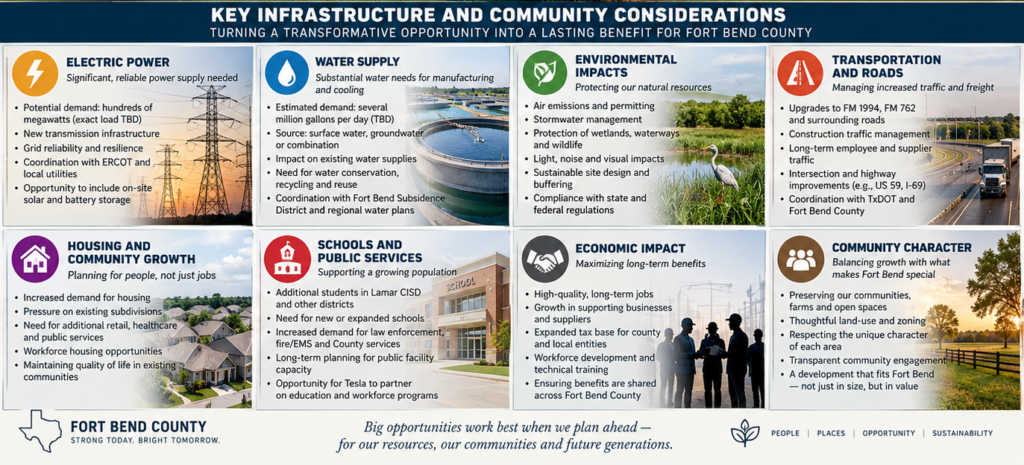
What wages will those jobs pay?
What new taxable value will remain?
What public incentives are being provided?
What infrastructure will be required?
What water and electricity will be consumed?
Who pays for roads, utilities and public services?
And what happens if the project becomes substantially larger — or smaller — than originally proposed?
Those are not anti-development questions.
They are the same kinds of questions a well-managed private company asks before making a major capital investment.
My experience tells me efficiency and growth are not opposing goals
I spent many years responsible for environments where computing capacity had to grow because the business demanded it.
Stopping growth was not an option.
The challenge was finding the most reliable and cost-effective way to accommodate it.
Sometimes that meant building. Sometimes it meant consolidating. Sometimes it meant colocation. Sometimes an equipment refresh could provide far more computing power in the same physical footprint. Every decision involved balancing performance, capital cost, operating expense, power, cooling, reliability and future expansion.
Those lessons remain applicable today, even though AI data centers operate at scales we could only imagine when I began working with HPC systems in the 1990s.
Technology changes.
The fundamentals of sound management do not.
Fort Bend should be capable of doing both
Fort Bend County should be capable of welcoming major investment and protecting the long-term interests of existing residents and businesses.
Those objectives are not inherently contradictory.
A strong agreement can allow a developer to build with certainty while protecting taxpayers from extraordinary project-specific costs.
Modern cooling can allow enormous computing capacity without the water consumption associated with older designs.
On-site generation, batteries and demand response can reduce stress on the electric grid.
Reclaimed water can preserve drinking-water supplies.
Performance requirements can provide incentives while ensuring that public benefits materialize before the full public benefit is delivered.
Infrastructure agreements can ensure that roads, utilities and emergency services keep pace with development rather than attempting to catch up afterward.
Texas appears to be moving in this direction. The state’s new data-center review is specifically examining many of these same subjects: public financial assistance, electricity dependency, on-site generation, water supply and consumption, cooling technology, noise, lighting, traffic, setbacks and emergency-response coordination. (Texas.gov)
That is a much more useful conversation than simply asking whether someone is “for” or “against” data centers.
The standard should be mutual benefit
Whether the next major proposal involves Tesla, an AI hyperscaler, advanced manufacturing, semiconductor production or an industry that has not yet been invented, I believe Fort Bend should ask a consistent set of questions.
What does the project bring?
What resources does it require?
What public infrastructure does it consume or create?
Who pays those costs?
What commitments are enforceable?
And does the arrangement remain beneficial to both the company and the community over the long term?
My experience operating large-scale high-performance-computing infrastructure taught me that capacity planning must occur before the demand arrives. My experience in county government reinforces the same lesson from the taxpayer’s side.
Fort Bend County is approaching one million residents. We are no longer a small suburban county on the edge of Houston. We are becoming an economic center in our own right.
Projects such as Tesla’s proposed Project Crystal Sun demonstrate the scale of opportunities now looking at Fort Bend.
The enormous growth of AI and data-center infrastructure demonstrates what may follow.
We should welcome the opportunity to compete for major investment. We should also insist on accurate information, transparent economics and clearly defined responsibilities.
The objective should not be development at any cost, nor should it be resistance to change. It should be growth in which the investor, the taxpayer and the community can all succeed.
That is how Fort Bend can remain both open for business and prepared for the future.
Bill Rickert is the Fort Bend County Treasurer. Prior to entering public service, he spent more than three decades in the technology and energy industries, including responsibility for global high-performance-computing infrastructure and seismic-imaging business.