October 14, 2026
Fort Bend County continues to be one of the fastest-growing areas in the Houston region, and with that growth comes the responsibility to ensure our transportation infrastructure keeps pace with the needs of our residents and businesses.
This morning, I had the opportunity to attend “Driving Fort Bend Forward: Toll Road Update,” hosted by the Fort Bend Regional Partnership’s Infrastructure Committee. The meeting featured an informative presentation by Jim Rice, Chairman of the Fort Bend County Toll Road Authority Board of Directors, and David Gornet, Executive Director of the Fort Bend County Toll Road Authority (FBCTRA).
The presentation provided valuable insight into the current performance of our toll road system, major transportation projects, and long-term plans to improve mobility throughout Fort Bend County.
A Growing Transportation Network
One of the most significant takeaways was the scope of Fort Bend County’s existing toll road infrastructure and the potential for future expansion.
The Fort Bend County Toll Road Authority currently oversees a network totaling approximately 33.5 miles, including:
- Fort Bend Parkway: 8.8 miles
- Westpark Tollway: 12.7 miles
- Grand Parkway: 12.0 miles
The projects outlined during the presentation could ultimately expand this network to 60.5 miles, an increase of approximately 27 miles.
Among the major projects discussed were:
Fort Bend Parkway Expansion: Plans include a 2.1-mile extension involving a new Brazos River crossing, along with future Segments C and D totaling another 18.2 miles. These improvements would extend the corridor farther south and provide additional transportation connections for growing communities.
Westpark Tollway Expansion: Following the addition of Segment B2, plans contemplate extending the tollway another 6.7 miles westward from Fulshear toward Simonton. This corridor is particularly important as residential and commercial development continues expanding in western Fort Bend County.
Grand Parkway Improvements: The presentation also highlighted future Grand Parkway connections and segments involving the Texas Department of Transportation, demonstrating the importance of coordination among local and state transportation agencies.
While these projects are at different stages of development, construction, and planning, they represent a significant long-term investment in Fort Bend County’s mobility and economic future.
Traffic and Revenue Growth Demonstrate Increasing Demand
The financial and operational information presented was especially interesting to me in my role as County Treasurer.
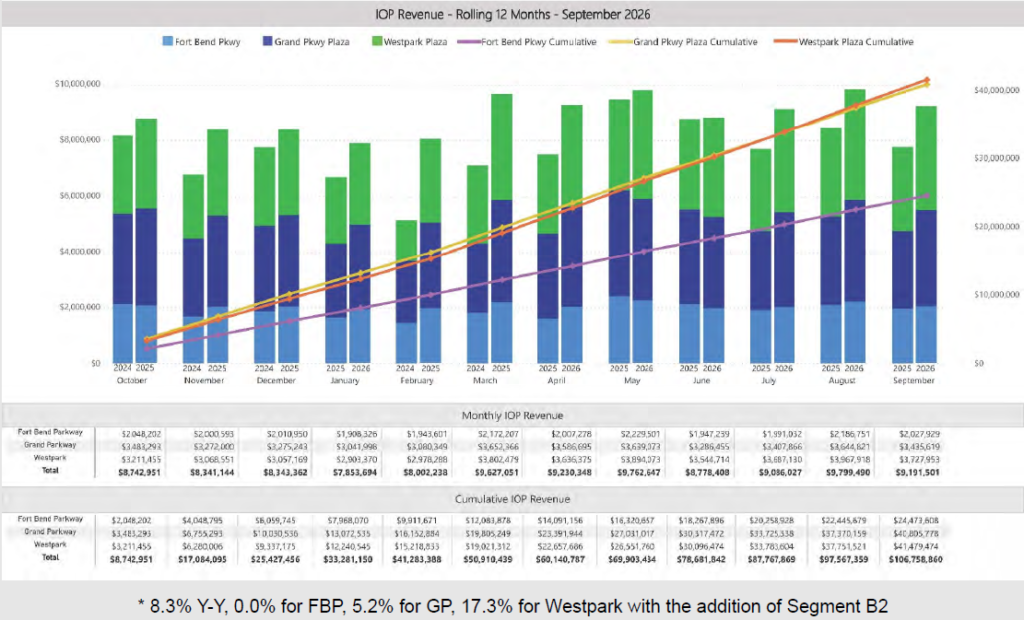
For the 12-month period ending September 2026, the Toll Road Authority reported:
- $106.76 million in revenue, compared with $98.57 million during the preceding 12-month period.
- 8.3% year-over-year revenue growth.
- 222.1 million toll transactions, compared with 200.2 million a year earlier.
- 10.9% growth in transaction volume.
May 2026 was the busiest month on record, with approximately 19.6 million toll transactions.
The Westpark Tollway was a particularly strong contributor, recording 17.3% revenue growth and 22% transaction growth, influenced by the addition of Segment B2.
These numbers illustrate the growing demand for transportation alternatives as our county’s population, employment centers, and business activity continue to expand.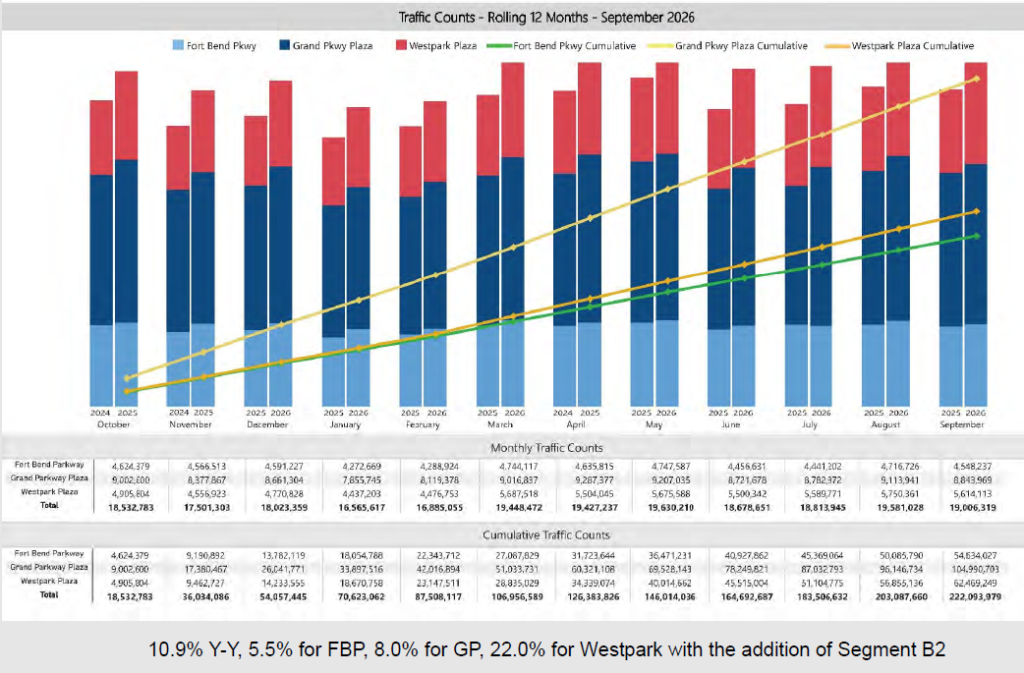
The discussion also addressed toll collection efficiency. Approximately 75% of tolls are paid automatically, while the remaining transactions require additional processing. Efficient collection systems, enforcement, and sound financial controls are important parts of operating a financially sustainable transportation network.
Infrastructure Investment Requires Financial Discipline
As Fort Bend County Treasurer, I understand that successful infrastructure development requires more than identifying transportation needs. It also requires careful financial planning, responsible management of public resources, and accountability.
Revenue growth is encouraging, but revenue alone does not tell the complete financial story. Construction costs, financing obligations, ongoing maintenance, operating expenses, and long-term sustainability must all be considered when evaluating infrastructure investments.
Just as importantly, transportation planning must anticipate future development rather than simply respond to congestion after it occurs.
Having spent more than three decades managing major business operations, financial resources, and complex infrastructure projects in the private sector, I appreciate the challenges of balancing immediate operational requirements with long-term capital investment.
Good planning today helps prevent more expensive problems tomorrow.
It is essential that Fort Bend County continues pursuing infrastructure solutions that improve mobility while maintaining the financial discipline and transparency taxpayers deserve.
Transportation Infrastructure Supports Economic Opportunity
A reliable transportation network is fundamental to our county’s continued economic success.
Businesses consider transportation access when deciding where to locate or expand. Residents depend on efficient roadways to travel to work, schools, medical facilities, and community activities. Commercial development depends on dependable connections between employment centers, residential areas, and the broader Houston metropolitan region.
Improved regional mobility can reduce congestion on existing roadways, support economic development, and enhance the quality of life for Fort Bend County families.
The Fort Bend Parkway, Westpark Tollway, and Grand Parkway each play an important role in this larger transportation system. Their continued development should be evaluated as part of a comprehensive, coordinated approach to the county’s future.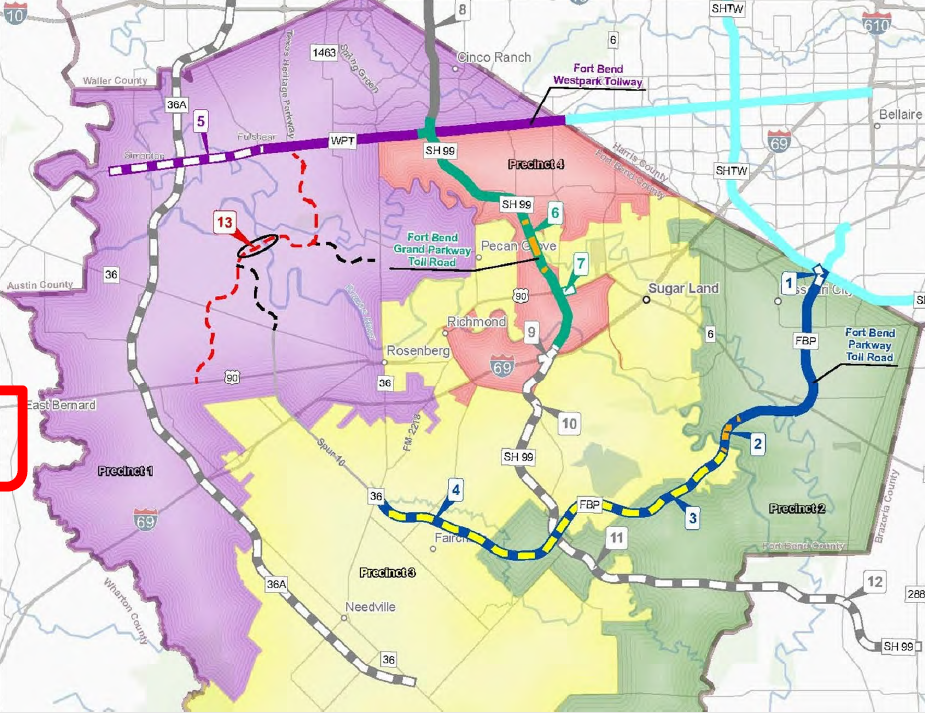
Working Together for Fort Bend County’s Future
I want to thank Jim Rice and David Gornet for their informative presentation and for sharing the latest information regarding the county’s toll road operations and future projects.
I also appreciate the Fort Bend Regional Partnership and its Infrastructure Committee for bringing together business leaders, public officials, and community stakeholders to discuss issues that directly affect our county’s economic development and quality of life.
Meetings like this provide an important opportunity to understand both the progress being made and the challenges that remain.
Fort Bend County’s continued growth presents tremendous opportunities, but realizing those opportunities requires thoughtful leadership, collaboration, responsible investment, and a commitment to long-term planning.
As your County Treasurer, I remain committed to fiscal responsibility, transparency, and the careful stewardship of public funds. Staying informed about major infrastructure initiatives is an important part of understanding the financial and economic forces shaping our county.
Fort Bend County’s future depends on the decisions we make today. By planning responsibly and working together, we can help ensure our transportation infrastructure supports the needs of our communities for generations to come.
Bill Rickert
Fort Bend County Treasurer
Leadership You Know. Results You Trust.
Additional Information:
Fort Bend County Toll Road Authority: https://www.fbctra.com/
Fort Bend Regional Partnership: https://fortbendregionalpartnership.com/