On Tuesday, August 25, I joined community leaders, transportation professionals, and members of the Fort Bend Regional Partnership for “Building Tomorrow: Mobility Bond Update,” an important discussion about the transportation projects shaping our county’s future.
Fort Bend County Engineer Stacy Slawinski, P.E., and Assistant County Engineer Ike Akinwande Jr., P.E., S.E., MLSE, provided an informative overview of the county’s mobility program and the work required to move major infrastructure projects from planning and design through construction and completion.
The program offered valuable insight into project progress, timelines, funding, coordination, and the long-term effect of transportation improvements on residents, businesses, public safety, and continued economic growth.
Growth Requires Planning
Fort Bend County’s continued growth is a tremendous opportunity, but it also places increasing pressure on our roads, intersections, drainage systems, and other public infrastructure.
Mobility affects much more than the amount of time we spend in traffic. It influences emergency response times, access to schools and employment, the movement of goods and services, neighborhood safety, business development, and our overall quality of life.
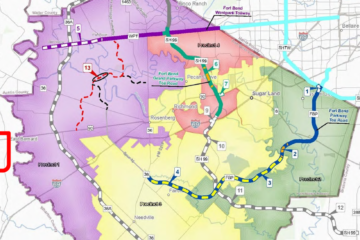
The county’s 2023 Mobility Bond authorized $712.63 million for transportation improvements. The bond order included a commitment by Commissioners Court not to increase the tax rate to issue the bonds. Projects encompass road expansions and repairs, traffic-safety improvements, pedestrian facilities, sidewalks, traffic-management technology, and other investments intended to accommodate Fort Bend County’s changing mobility needs. Fort Bend County’s official bond information provides additional details.
These investments are essential, but approving a project is only the beginning. Successful delivery may require engineering and environmental studies, right-of-way acquisition, utility relocation, drainage design, coordination with cities and state agencies, bidding, construction management, and careful financial planning. Each phase must be managed responsibly.
Financial Stewardship and Infrastructure Success
As Fort Bend County Treasurer, I view these projects through the lens of both infrastructure and stewardship.
Major capital programs require sound cash-flow planning, strong internal controls, careful management of public funds, and transparent reporting. Funds must remain secure and available when needed to pay contractors and meet the county’s lawful obligations, while idle balances must be managed prudently and in accordance with Texas law and the county’s investment policies.
Financial oversight is not separate from successful project delivery—it is one of the foundations that makes delivery possible.
Taxpayers deserve to know not only which projects have been approved, but also where those projects stand, how public funds are being used, and what benefits residents can expect when the work is completed. Fort Bend County provides an online Mobility Road Projects resource where residents can review information about approved projects.
I appreciated the practical perspective shared by Mr. Slawinski and Mr. Akinwande. Their experience reflects the complexity of managing infrastructure in one of the region’s most dynamic counties. The discussion reinforced the importance of anticipating future needs, coordinating across jurisdictions, and keeping projects focused on measurable benefits for the public.
Mobility Supports Opportunity
Transportation infrastructure is also economic infrastructure.
Companies considering an investment in Fort Bend County examine the reliability of our roadway network, access to employees and customers, freight movement, commute times, and whether the community is prepared for future growth. Well-planned mobility investments help existing businesses succeed while strengthening our ability to attract new employers and opportunities.
At the same time, fiscal discipline must remain at the center of every decision. Growth alone does not excuse waste, unnecessary delays, or inadequate oversight. Residents expect county leaders to establish priorities, manage risks, communicate progress, and deliver the projects voters authorized.
That requires cooperation among county officials, engineers, contractors, consultants, municipalities, regional agencies, and the public. No single office or organization can meet Fort Bend County’s transportation challenges alone.
Building Tomorrow Together
I want to thank the Fort Bend Regional Partnership for bringing together public officials, engineers, business leaders, and community stakeholders for this valuable conversation. I also appreciate County Engineer Stacy Slawinski and Assistant County Engineer Ike Akinwande for sharing their expertise and answering questions about the county’s mobility program.
Thank you as well to event sponsors Bowman Consulting Group, DCCM, Huitt-Zollars, Kaluza Inc., and WSB for supporting this educational program.
Fort Bend County’s future will depend on how effectively we plan for growth today. By combining thoughtful infrastructure planning, professional project management, financial discipline, and transparency, we can improve safety, reduce congestion, strengthen our economy, and preserve the quality of life that makes Fort Bend County such a desirable place to live and work.
Building tomorrow requires more than a vision. It requires responsible execution—and continued accountability to the people we serve.
— Bill Rickert
Fort Bend County Treasurer