I recently had the opportunity to attend the City of Needville’s “Future of Needville” presentation, and I came away impressed by the amount of thought being put into preparing this historic Fort Bend County community for what could be a period of significant change.
The theme of the presentation “Honoring Our Past While Preparing for Our Future” was especially appropriate as we commemorate America’s 250th anniversary. Needville has a proud history and a strong small-town identity, and the challenge before its leaders is one facing many communities in Fort Bend County: how do you accommodate growth without losing the qualities that made people want to live there in the first place?
What impressed me was that Needville is not simply talking about growth. The city is talking about planning for growth.
Needville Today
The presentation provided a useful snapshot of the city in fiscal year 2026. Needville has a population of approximately 3,248 residents and operates with an annual budget of about $6 million.
That relatively small city government is responsible for a substantial amount of infrastructure and public service. Needville has 21 city employees, including nine police officers and nine public works employees. The city maintains approximately 22 miles of streets, serves 1,365 water and wastewater customers, and oversees approximately 30.5 miles of water lines and 25 miles of sewer lines.
Between 2020 and 2026, Needville’s population increased from 3,089 to 3,248—about 5.1 percent. That is steady and manageable growth.
But the projections presented for the next several years tell a much different story.
Preparing for a Potential Growth Surge
The city’s projections anticipate Needville’s population could grow to approximately 7,145 residents by 2031, more than doubling its current population.
The presentation also anticipates approximately 1,446 new homes and projects the city’s property tax base could grow from approximately $323 million to $893 million.
These are projections rather than guarantees, but they illustrate why the decisions being made today are so important.
You cannot wait until the houses are built and the residents arrive to begin thinking about water capacity, wastewater treatment, drainage, streets, police services and municipal facilities. By then, you are already behind.
Needville is taking a “planning first” approach.
The city reported that its Water and Wastewater Master Plan and Drainage Master Plan have been completed and adopted in 2026. A Facility Master Plan, Impact Fee Study and comprehensive code review are also underway.
That kind of advance planning creates a roadmap for growth and, just as importantly, helps determine who should pay for the infrastructure required to support that growth.
Infrastructure Before Growth
Several planned investments stood out.
Needville is working to increase water plant capacity and pressure, assess future wastewater plant expansion, strategically upgrade water and sewer lines, and inspect existing sewer infrastructure.
Drainage and resiliency are also receiving attention through drainage rehabilitation projects, the Fairchild Creek Watershed Project and updates to flood-damage-prevention requirements.
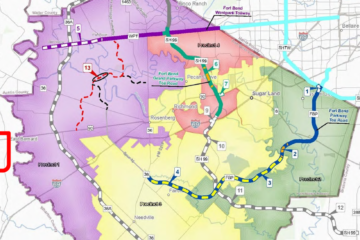
Transportation planning includes Highway 36 improvements in partnership with TxDOT, Richmond Street reconstruction with Fort Bend County, additional street projects involving the county, and a broader Mobility Master Plan. Needville and the Houston-Galveston Area Council are currently developing a long-range City of Needville Mobility Plan intended to improve mobility while preserving the community’s small-town character.
These partnerships matter. Municipal boundaries should never become barriers to cooperation when we are trying to solve regional transportation, drainage and infrastructure challenges.
Fiscal Responsibility Is Part of Growth Planning
As Fort Bend County Treasurer, one portion of the presentation particularly resonated with me: “Why Planning Matters.”
The city identified several reasons—creating a roadmap for growth, prioritizing capital investments, strengthening grant applications, supporting responsible development, maximizing taxpayer dollars and preventing costly surprises later.
That is fundamentally what financial stewardship is about.
Growth can bring tremendous opportunity, but growth also creates costs. New residents require additional infrastructure and services. If those costs are not anticipated and properly planned, existing taxpayers can eventually be left paying for yesterday’s decisions.
One of the principles highlighted in the presentation was particularly important: growth that pays for itself.
Responsible economic development should expand opportunity and strengthen the tax base while ensuring that infrastructure obligations are understood before commitments are made.
Modernizing Government While Preserving Community
Needville is also investing in the way residents interact with their city government.
Initiatives include live-streamed agendas and meetings through Granicus, a CivicPlus website, GIS implementation, online permitting and bill payment, and other technology improvements intended to increase transparency and efficiency.
At the same time, city leaders clearly understand that Needville’s future cannot simply be measured in population numbers, tax base or construction permits.
The presentation repeatedly returned to community values—supporting existing businesses, revitalizing downtown, maintaining strong ties with Needville ISD, supporting volunteer organizations, improving parks, hosting community events and preserving the small-town quality of life that makes Needville unique.
That balance is important.
A Strong Vision for the Road Ahead
Needville identified eight major priorities looking forward:
- A new Police Department
- Street improvements
- Utility investments
- Economic development
- Park improvements
- Downtown enhancements
- Technology modernization
- Financial sustainability
The last item belongs beside every one of the others.
Projects are important, but communities must also be able to afford to build, operate and maintain them for decades to come. Long-term financial sustainability is what turns a list of projects into a responsible plan.
Fort Bend County is fortunate to have communities with very different histories and identities. Needville’s small-town heritage is an important part of what makes our county special, and growth should enhance that character—not erase it.
As we celebrate America’s 250th anniversary, there is something fitting about Needville’s message of honoring the past while preparing for the future.
I appreciated the opportunity to attend, listen and learn more about what lies ahead for Needville. The growth may be coming, but thoughtful planning, fiscal responsibility, strong partnerships and a commitment to community can help ensure that twenty years from now, Needville remains a wonderful place to live, work, raise a family and call home.