Houston Area ‘G’ Gauger’s
This summer marks 12 years since construction began on one of the Rosenberg Railroad Museum’s most beloved attractions—the Garden Railroad.
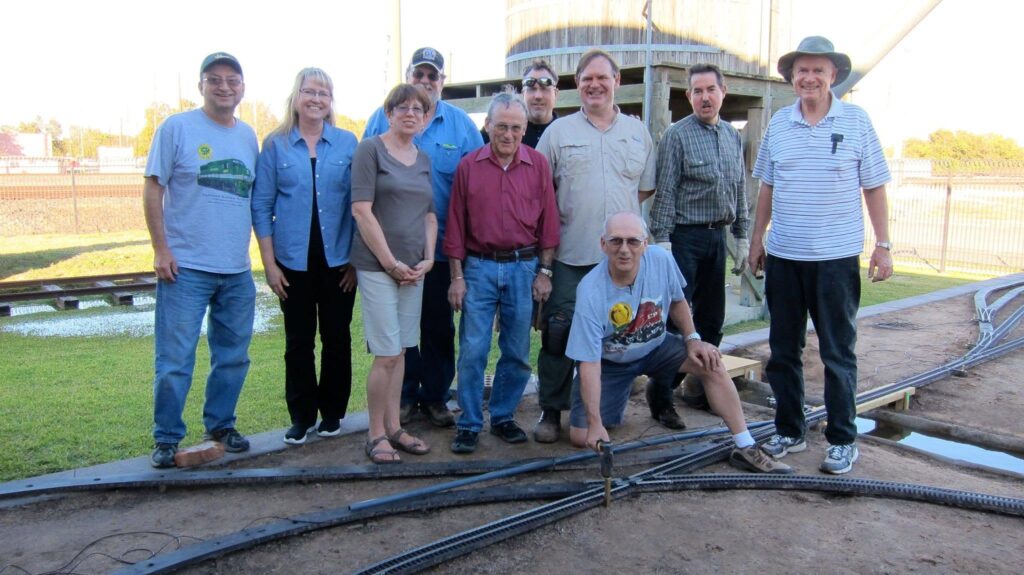
In the summer of 2014, members of the Houston Area “G” Gaugers joined museum volunteers to break ground on an ambitious outdoor model railroad. By Christmas, the first trains were running. What began as track, soil, plants and a shared vision has grown into a living miniature portrait of the community that railroads helped create.
The anniversary is especially meaningful to me. My involvement with the Rosenberg Railroad Museum began in 2011, making this my 15th year of service to an organization I deeply value. I have been honored to serve in several leadership roles, including board president, past president and, today, second vice-chairman.
I am proud of the museum’s growth, but even more grateful for the people who made that growth possible. I am also proud that this chapter of service has been shared with my wife, Lisa Pezant Rickert, whose contributions to the museum have been significant.
Preserving the Story of a Railroad Town
Rosenberg is not merely a community through which railroads happen to pass. The railroad is central to the city’s very existence.
The junction that became Rosenberg developed in the late 1870s, and the Gulf, Colorado and Santa Fe Railway laid out the townsite in 1883. The community was named for Henry Rosenberg, one of the railroad’s early leaders. Rail connections helped transform the area into a center for commerce, agriculture, transportation and communication.
The Rosenberg Railroad Museum grew from a determination that this history should not be lost.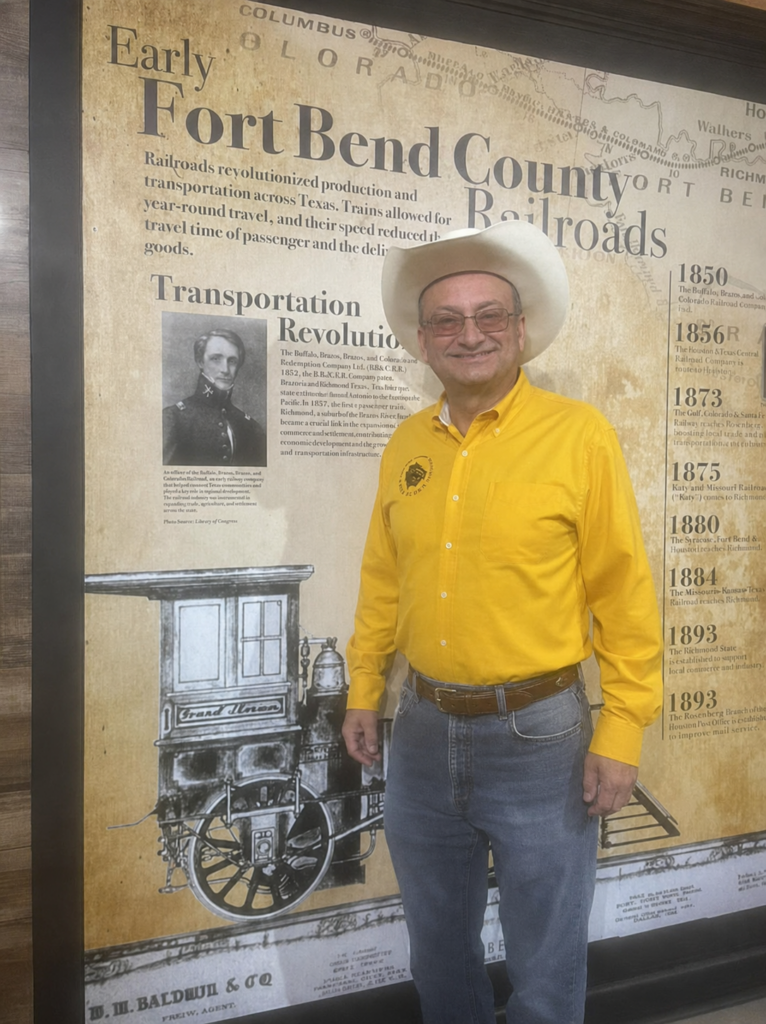
In 1992, local citizens organized an effort to preserve Fort Bend County’s railroad heritage. The following year, the Atchison, Topeka and Santa Fe Railway donated approximately 1.47 acres in downtown Rosenberg for the museum. Among the earliest major acquisitions was the “Quebec,” an extraordinary business railcar originally constructed as a passenger coach in 1879.
Because Rosenberg’s original depots had disappeared, the museum built a reproduction of the historic Rosenberg Union Depot. Its grand opening in 2002 attracted thousands of people and established a permanent home for the community’s railroad story.
The museum’s collection continued to expand. Tower 17—the last traditionally manned railroad interlocking tower in Texas—was retired after operating from 1903 until 2004 and moved to the museum grounds. A Missouri Pacific caboose arrived in 2006. Exhibits, model railroads, educational spaces and public programs followed.
Each addition represented more than another object in a collection. Each preserved part of the story of the people whose work connected Fort Bend County to the rest of Texas and the nation.
A Shared Commitment for Lisa and Me
When I began serving the museum in 2011, I saw tremendous potential. I also understood that realizing that potential would require sound financial stewardship, stronger educational programming, an active volunteer base and a long-term vision.
While I served as board president, Lisa became deeply involved in the museum’s daily work. She served as interim executive director and later as program director. Her responsibilities included coordinating staff and volunteers, supporting educational programs, developing exhibits, organizing public activities and helping manage the countless operational details required to keep a community museum moving forward.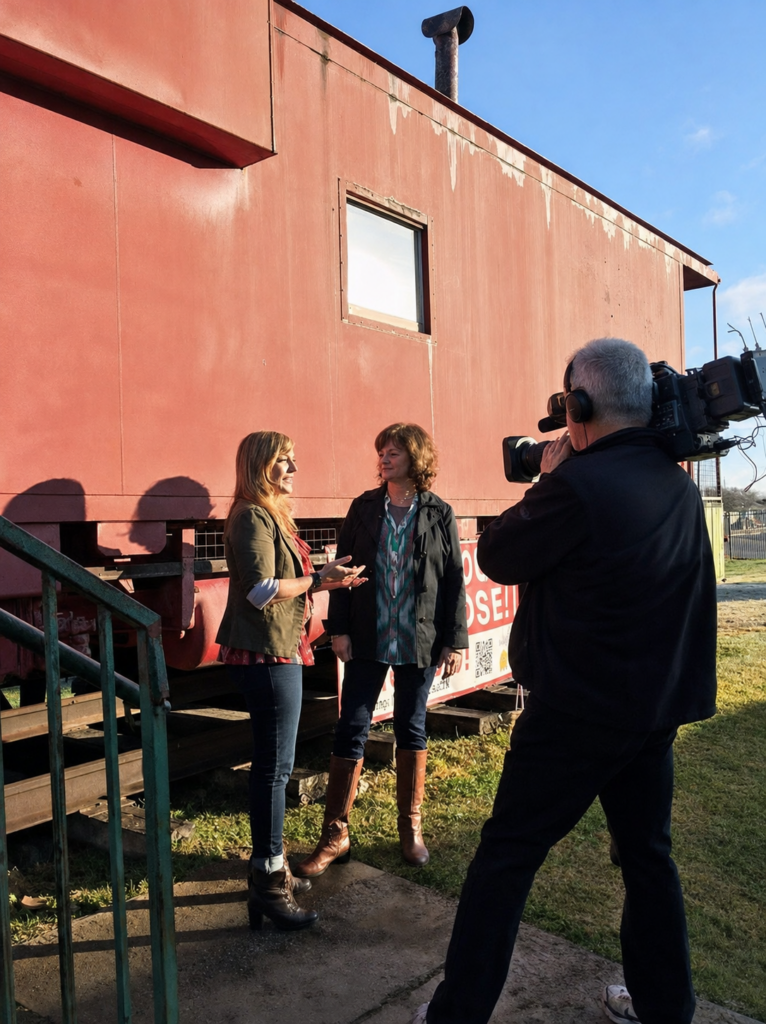
Lisa did not simply attend events as the board president’s wife. She invested her own time, abilities and leadership in the museum. Together, we supported fundraising events, welcomed museum supporters into our home and worked alongside board members, staff, volunteers, donors and community partners.
In 2013, one of our major priorities was expanding the docent and education programs. A museum fulfills its mission only when someone brings its artifacts to life—when a knowledgeable volunteer explains how a railroad worker lived, how an interlocking tower protected trains or how rail service allowed communities to grow.
That same commitment to education helped create the environment in which the Garden Railroad could succeed.
Building a Community in Miniature
The Garden Railroad was planned as an outdoor G-gauge interpretation of Rosenberg, Richmond and the surrounding Fort Bend County area during the 1950s. At approximately 1:29 scale, it is large enough for children and adults to appreciate its remarkable details while remaining small enough to portray an entire community.
The layout includes recognizable local landmarks, period automobiles, miniature residents and carefully maintained live landscaping. Visitors can find representations of Another Time Soda Fountain and the historic Ebell House, along with a miniature Brazos River and railroad bridge. Bonsai-style shrubs are trimmed to resemble mature trees.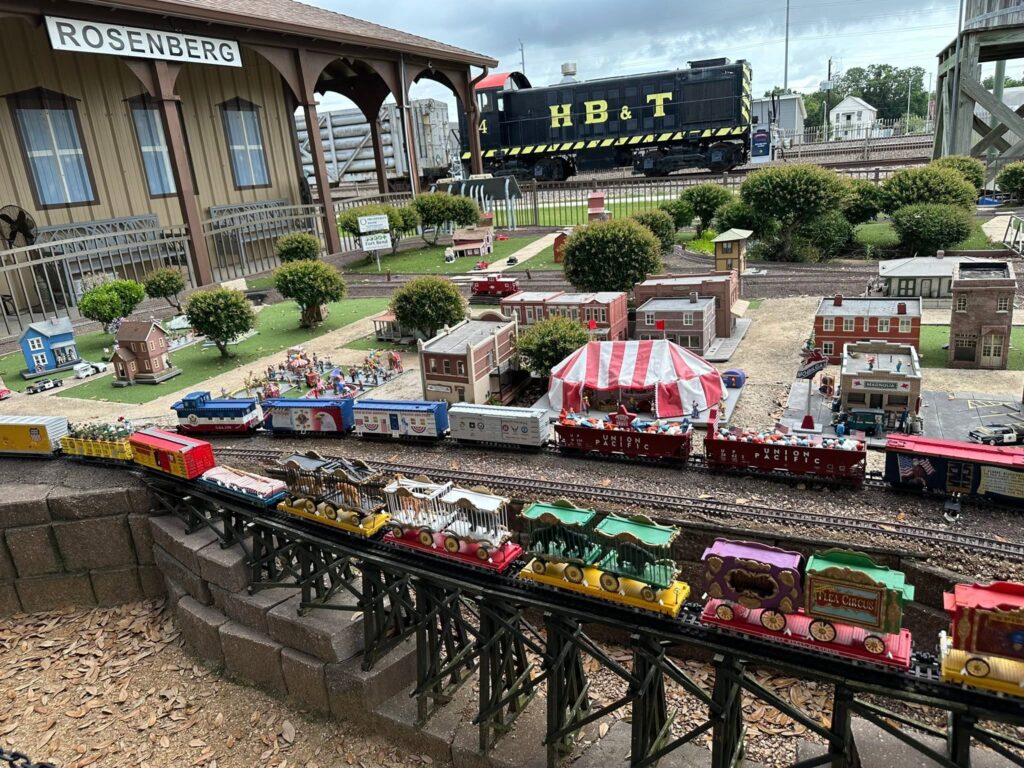
It is a model railroad, but it is also a lesson in geography, engineering, transportation, agriculture and local history.
A child may first be attracted by the moving locomotive. A parent may recognize a downtown building. A longtime resident may remember when the real community looked much like the one depicted in miniature. Those different experiences meet around the same railroad.
The Garden Railroad also connects the museum’s past to an active community of model railroaders. The Houston Area G Gaugers did far more than help begin construction. Their members have continued maintaining the layout and regularly operating their trains. Monthly run days and specially themed trains—from historic steam locomotives to circus, patriotic and holiday trains—keep the exhibit fresh and invite families to return.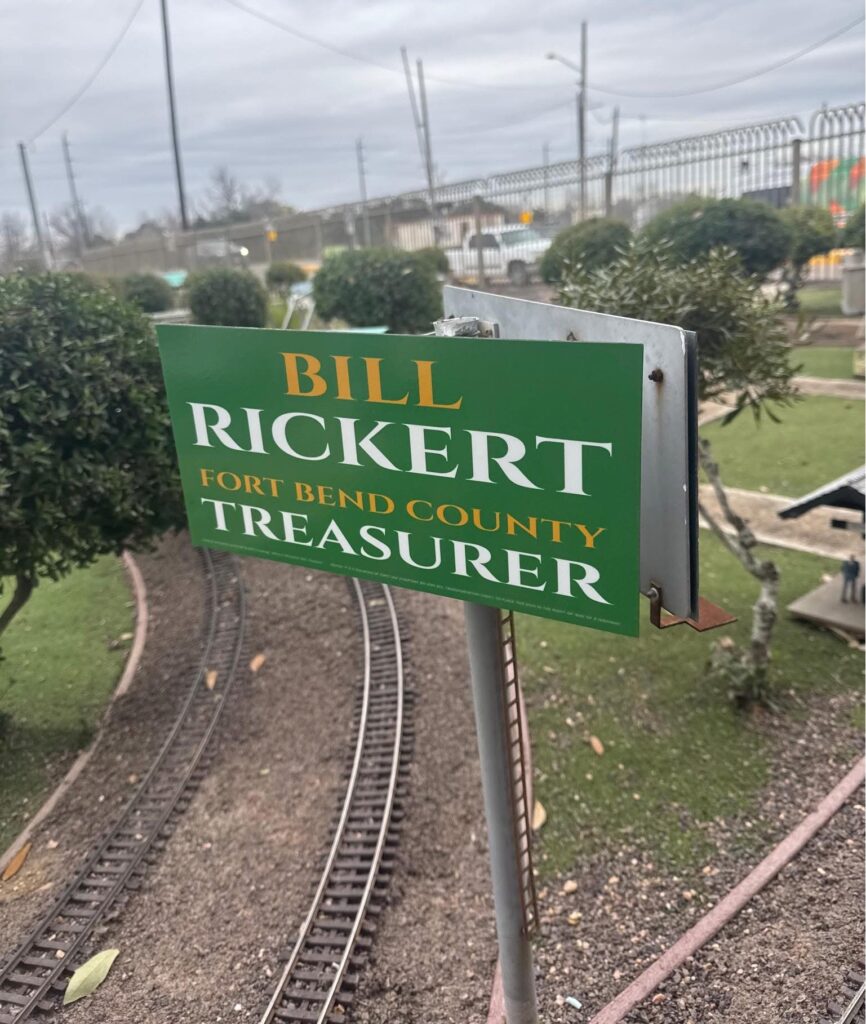
Lisa and I are proud to have supported the project during its formative period, but the principal credit belongs to the Houston Area G Gaugers and the many volunteers, donors and museum professionals who transformed an idea into a lasting attraction.
Twelve Years of Continued Growth
The first trains running by Christmas 2014 did not mark the end of the Garden Railroad project. Like a real community, the layout has continued to mature and change. Plants grow, buildings are maintained, track requires attention and new details are added.
The museum has grown in much the same way.
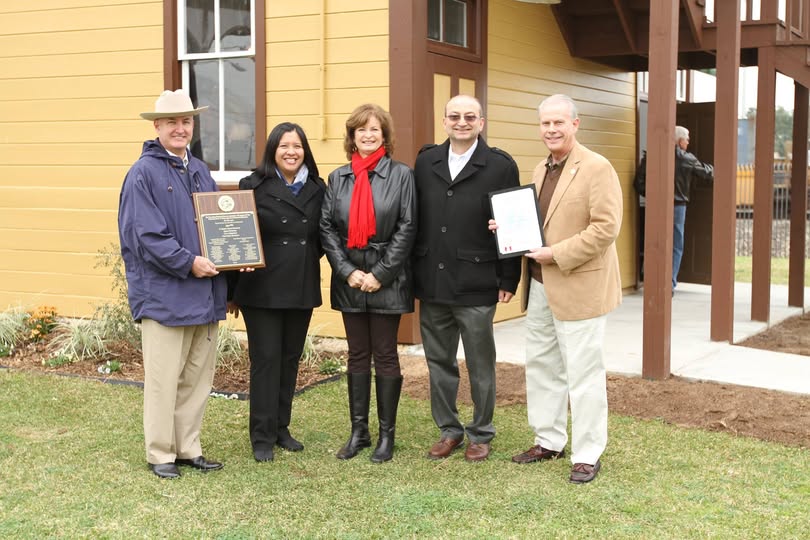
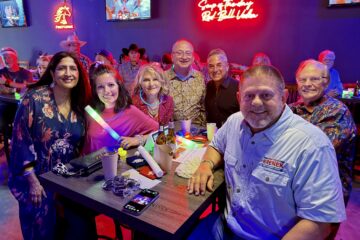
Richard Morrison, Ratha Liladrie, Lisa Rickert, Bill Rickert, Vincent Morales
In February 2015, while I was board president and Lisa was serving as program director, the museum celebrated the grand reopening of Tower 17 following major restoration work supported by the George Foundation and the City of Rosenberg. Visitors were once again able to experience its original interlocking machine and learn how operators safely controlled trains through one of Texas’ busiest railroad junctions.
The Missouri Pacific caboose received an exterior restoration in 2018 and an interior renovation in 2022. The museum expanded its model-train displays, educational programs and community events. In 2024, approximately 7,000 people visited as part of educational tour groups—about one-third of the museum’s annual attendance.
More recently, the Heritage Rail Project has represented one of the largest expansions in the museum’s history. The project includes drainage and accessibility improvements, new sidewalks and approximately 387 feet of display track. It is expanding the museum’s collection with a 1945 Houston Belt and Terminal switcher locomotive, a 1938 combination freight and Railway Post Office car, a 1950 Super Chief-era dormitory-lounge car with a barber shop, and a rare 1955 helium tank car connected to the history of America’s space program. 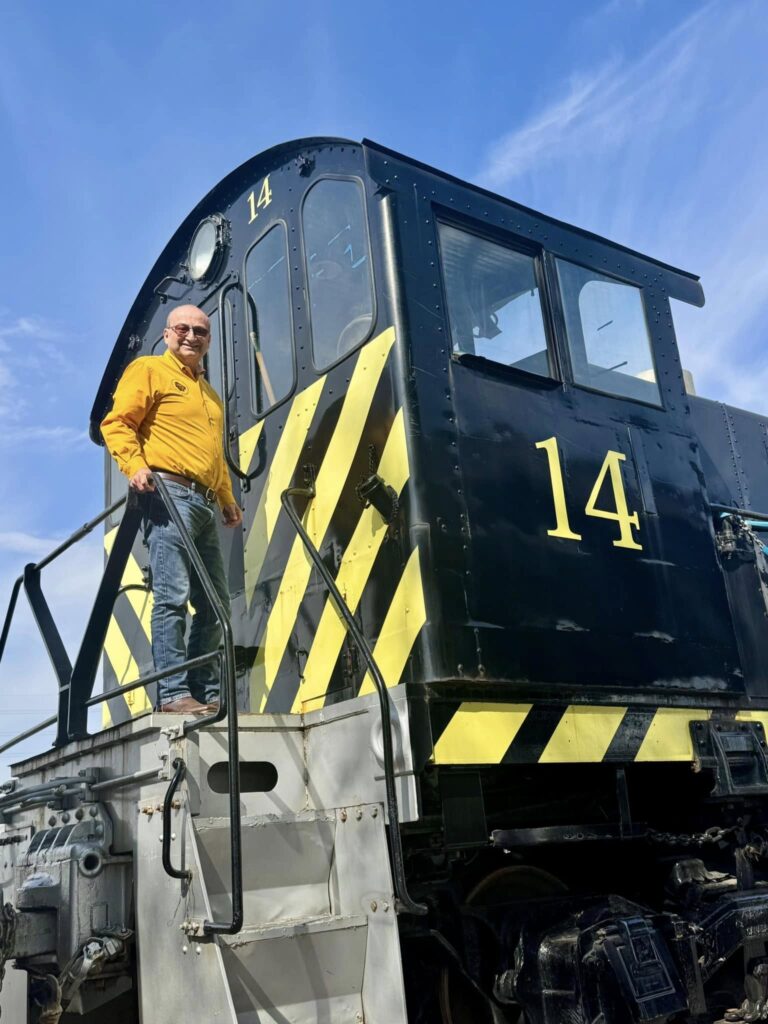
These additions allow the museum to tell new stories about rail yards, passenger travel, mail service, industrial transportation, science and the Space Race. They also demonstrate that the Rosenberg Railroad Museum is not standing still. It continues to preserve history while finding new ways to make that history relevant to future generations.
Honored to Have Played a Part
As Fort Bend County Treasurer, I often speak about stewardship—the responsibility to protect what has been entrusted to us while preparing it for the future. Historic preservation requires that same combination of care, accountability and long-term thinking.
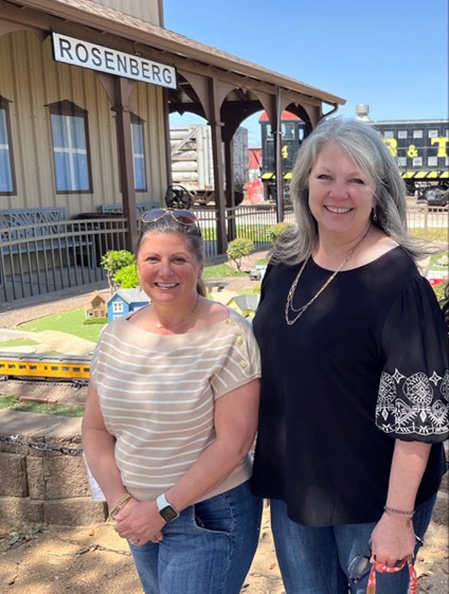
Rainey Webster, Tracy Hobdy
No individual builds a successful museum. The Rosenberg Railroad Museum’s accomplishments belong to generations of board members, executive directors, staff members, docents, model railroaders, foundations, businesses, local governments, donors and volunteers.
For 15 years, I have been honored to work alongside many of those people. Lisa and I are grateful that we were able to serve together during an important period in the museum’s development, and we remain proud supporters of its mission.
When I watch a train travel through the Garden Railroad today, I think about that first summer of construction 12 years ago. I think about how much the exhibit has matured, how much the museum has grown and how many families have discovered Fort Bend County’s history there.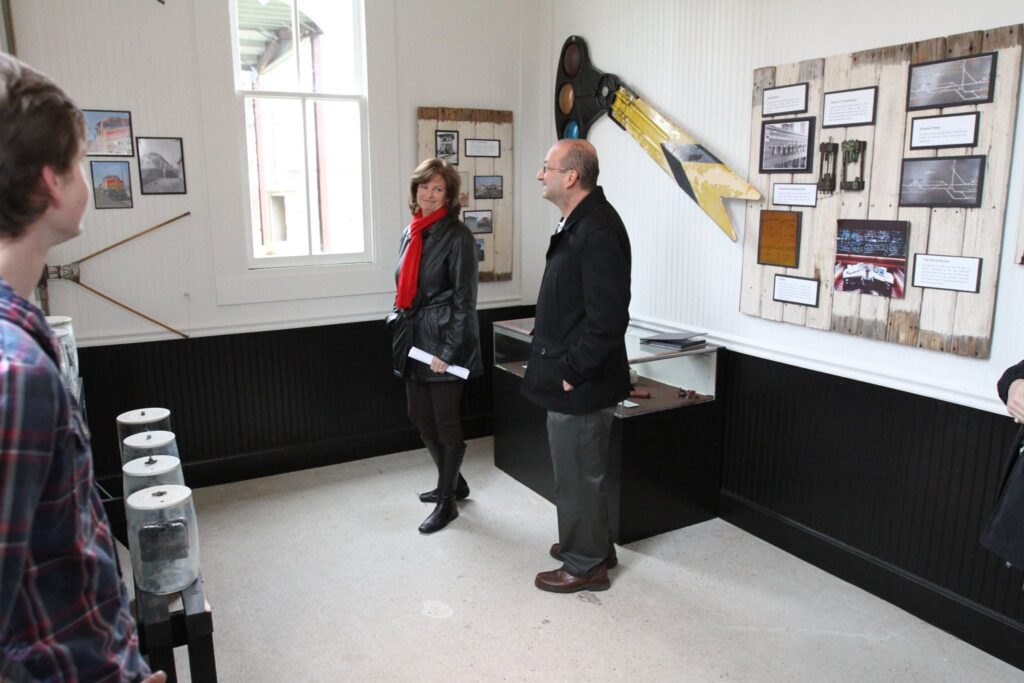
Most importantly, I am reminded that railroads did not simply pass through our community. They helped build it.
The Rosenberg Railroad Museum ensures that story will continue to be told—one artifact, one volunteer, one visitor and one trip around the Garden Railroad at a time.